Opening Range Breakout Strategy for Momentum Traders
Instead of chasing random candles at 9:33, you let the market form an early range, mark your key levels, and only take the trade when price proves direction with volume.
.webp)
If you trade momentum stocks, the open is where the money is… and where most traders get wrecked.
The Opening Range Breakout (ORB) strategy gives you something most “setups” don’t: structure.
Instead of chasing random candles at 9:33, you let the market form an early range, mark your key levels, and only take the trade when price proves direction with volume.
Done right, ORB can be one of the cleanest, most repeatable momentum setups you’ll ever trade.
TL;DR
- ORB = trade the break of the first 5–15 minutes of price action (the “opening range”) with momentum + volume.
- The best ORBs happen on A+ gappers with catalysts, high relative volume, and clean daily chart “room to run.”
- Most traders lose on ORB because they trade the 1-minute noise and get chopped; the 5-minute ORB is usually cleaner.
- Your risk plan should be mechanical: stop back inside the opening range, targets at whole dollars / HOD / daily levels, scale out.
- If the breakout fails and reclaims back into the range, treat it as a warning sign (and sometimes a reversal setup).
What Is an Opening Range Breakout?
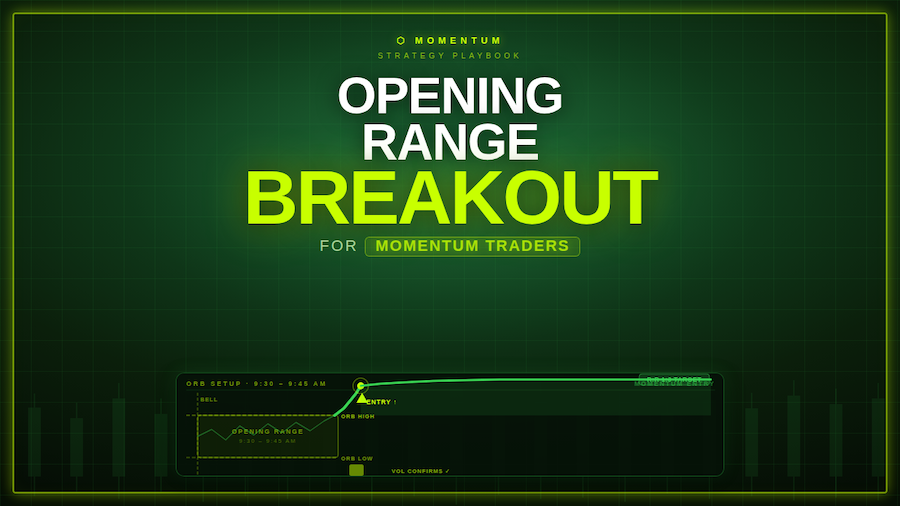
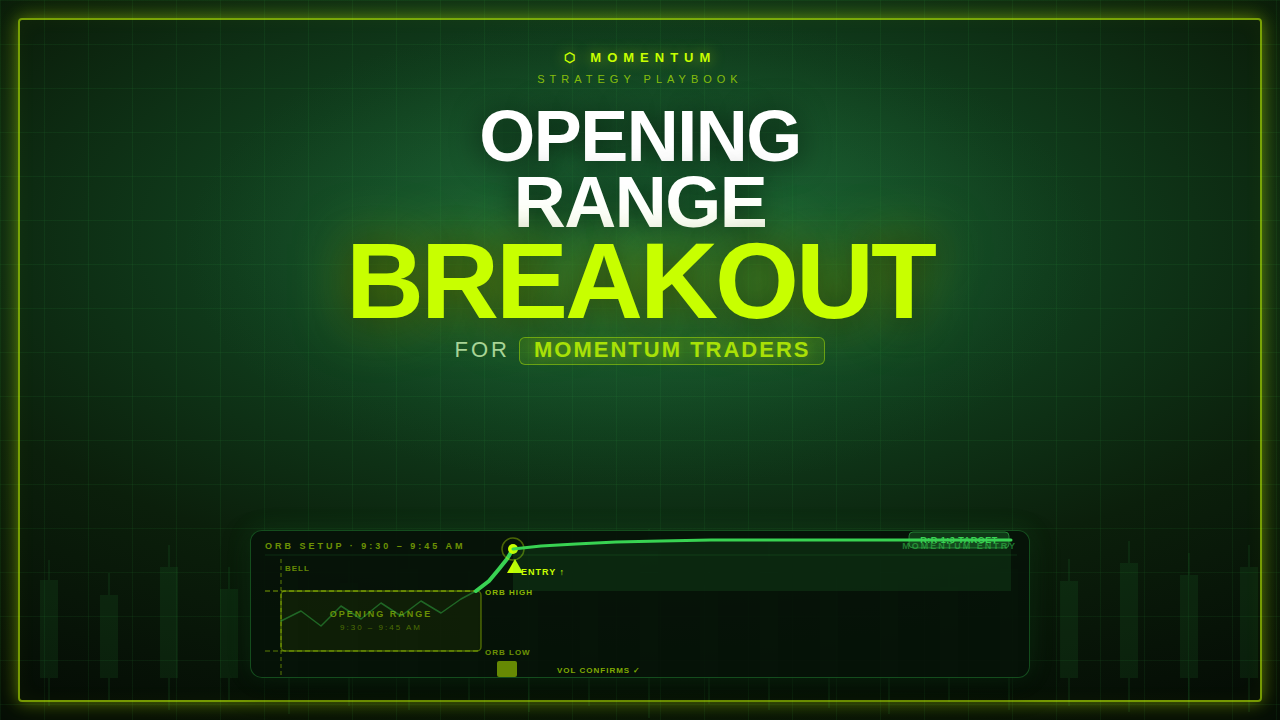
The “opening range” is simply the high and low made during the first part of the session.
Common ORB windows:
- 5-minute ORB (most popular for momentum day trading)
- 10-minute ORB
- 15-minute ORB (smoother, fewer fakeouts)
Once that range is set, you’re watching for:
- A break above the range high (bullish ORB)
- Or a break below the range low (bearish ORB)
But the breakout itself isn’t enough. The edge comes from trading ORB only when the stock has the right context.
Why ORB Works (When It Works)
The open is when:
- liquidity floods in
- institutions place size
- algorithms respond to early strength/weakness
- breakout traders pile into obvious levels
That makes the opening range one of the most important “decision zones” of the whole day.
A clean break from that range often triggers:
- momentum buyers entering
- shorts covering (fuel)
- continuation to key levels like whole dollars and daily resistance
If you want to build a solid premarket selection process so you’re trading the right names, this pairs well with:
The ORB Setup (The Version Momentum Traders Should Trade)
1) Start with the right stock (this matters more than the pattern)
The best ORBs usually come from:
- a stock with a real catalyst (news, earnings, sector heat)
- high relative volume
- strong premarket trend (higher lows, holding gains)
- a daily chart with clean space to the next resistance
If the daily chart is boxed in with overhead supply, your ORB is basically a coin flip.
2) Mark your levels before the bell
At minimum:
- Premarket high / low
- Whole/half dollars (especially on small caps)
- Previous day high/low (if relevant)
- VWAP (intraday magnet)
3) Define the opening range (5–15 minutes)
Pick one window and be consistent.
If you’re newer, the 5-minute ORB is a great default because it’s structured but not painfully slow. (And for many traders, it’s much cleaner than trying to scalp every 1-minute wiggle.)
4) Require confirmation (don’t just buy the first poke)
What you want to see:
- Break above OR high with volume expansion
- Price doesn’t instantly snap back inside the range
- Ideally: a break + hold, or break + clean retest
ORB Entry Options (Pick One and Get Good at It)
Entry A: Break-and-Go (aggressive)
- Enter as it breaks above the OR high
- Works best on strong trend days / A+ momentum names
Downside: easiest way to get faked out.
Entry B: Break + Hold (more conservative)
- Let it break
- Wait for it to hold above the level for a moment (or close a 1–5 min candle above)
Downside: sometimes you enter later.
Entry C: Break + Retest (highest quality)
- Let it break above the OR high
- Wait for it to pull back and retest the OR high
- Enter on the bounce/reclaim
Downside: not every stock gives a clean retest.
If you’re trying to trade ORB without feeling like you’re gambling, Entry C is the one.
Stop Loss Placement (Simple Rules That Keep You Alive)
Your stop should invalidate the setup, not your ego.
Common stop approaches:
- Back inside the opening range (most common)
- Below the OR low (wider; usually too wide for many tickers)
- Below the retest low (if you took retest entry)
A practical rule:
- If it breaks out and then reclaims back into the range, your edge is gone. Cut it.
This is also where failed breakouts come from. If you trade ORB long and it fails hard, that same structure can set up a reversal play (the “trap” concept).
Profit Targets (How to Actually Get Paid on ORB)
ORB winners can run, but only if you manage them like a pro.
High-probability targets:
- Next whole dollar / half dollar
- High of day (HOD) extension
- Daily resistance level
- Measured move (range size projected upward — optional)
A clean execution model:
- Take partials into the first strong push (reduces emotional decision-making)
- Move stop to reduce risk once the trade proves itself
- Let a runner work if the stock is trending
The Most Common ORB Mistakes (Read This Twice)
1) Trading ORB on low-volume junk
If the stock isn’t liquid and moving cleanly, ORB becomes chop.
2) Using the 1-minute chart as your “truth”
The 1-minute chart is great for execution, but terrible for decision-making if you’re not experienced. It fakes people out constantly.
3) Trading ORB without premarket context
ORB is not a standalone setup. It’s the trigger inside a bigger plan.
Again, if you want the “which stocks are even worth trading?” framework, start here:
4) No plan for failed breakouts
When ORB fails, it often fails fast.
If you don’t have rules for “breakout failed = I’m out,” you’ll round-trip green trades into red.
5) Holding and hoping instead of cutting
ORB is built on early momentum. If that momentum disappears, you’re not in an ORB anymore—you’re just stuck.
ORB Strategy Checklist (Keep This Next to Your Screens)
Before you take an ORB trade:
- [ ] Is there a catalyst / real reason the stock is moving?
- [ ] Is relative volume strong and liquidity clean?
- [ ] Does the daily chart have room to run?
- [ ] Are premarket levels and whole dollars marked?
- [ ] Is the opening range defined (5/10/15 min — consistent)?
- [ ] Is volume confirming the breakout?
- [ ] Do I know exactly where I’m wrong (stop) and where I’m paid (targets)?
If you can’t check these boxes quickly, skip it.