Rotation and Sympathy: Finding the Next Mover Before the Crowd
.webp)
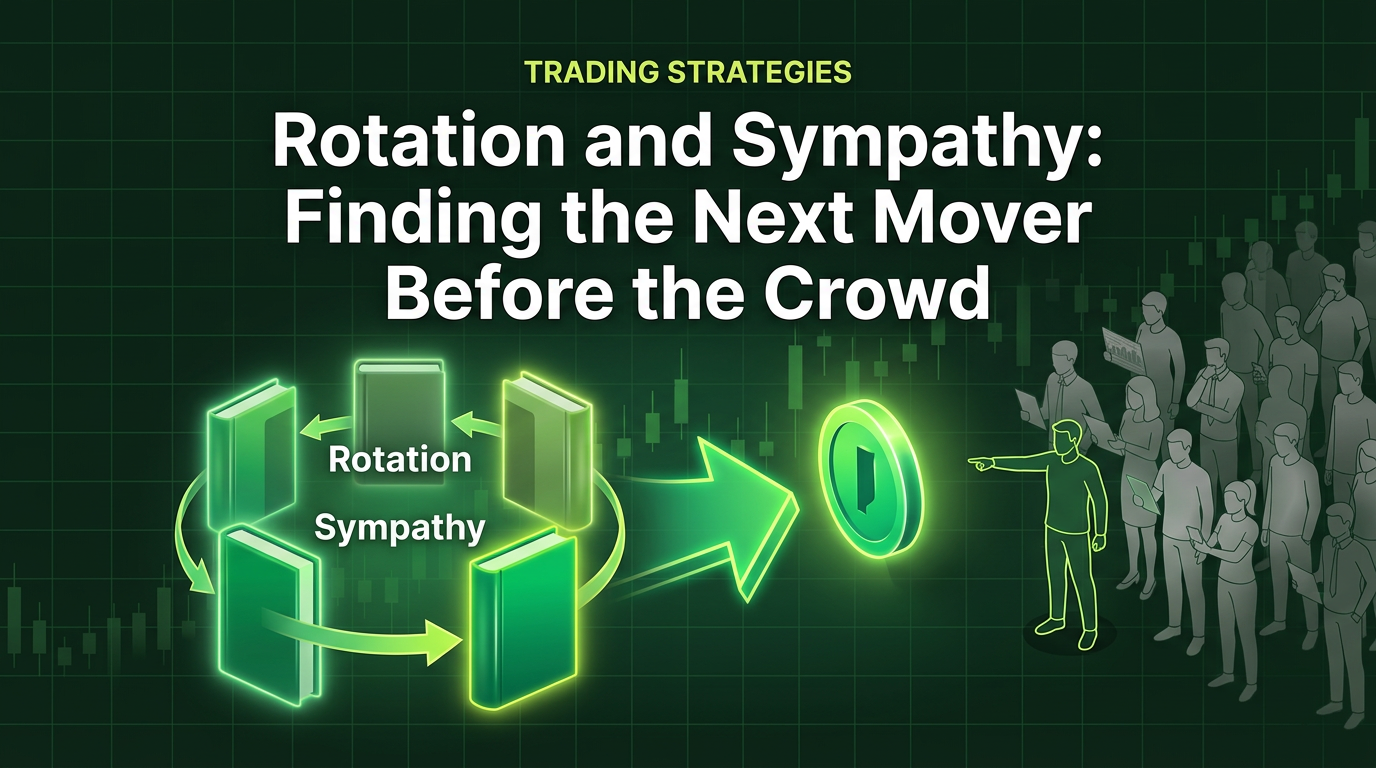
One stock in a group runs 100 percent, and every trader piles into it. I am usually not looking at that one. I am looking at its neighbor, the stock in the same theme that has not moved yet.
That is the sympathy play, and it sits on top of a simple truth. Money does not stop at one stock. When a name runs on news, traders go hunting for the next one in the same group. If you can spot that rotation early, and wait for a clean setup, you can position for the move without chasing the one that already went.
TL;DR
- A sympathy play is a stock that moves because a related company, or its whole sector, just moved on news.
- Rotation is the money flowing out of the leader that already ran and into the next name in the theme.
- The edge is not the leader. It is the clean peer that is just starting to set up, before the crowd arrives.
- I still wait for the obvious setup and a defined level to risk against. Rotation tells me where to look, not what to buy blindly.
- If the sympathy name is already extended and messy, I pass. No level, no trade.
What is a sympathy play?
A sympathy play is a stock that moves because another company, usually a competitor or a peer in the same sector, released news or made a big move. The news lifts the whole group, not just the one stock it was about. Traders expect the read-through, so they buy the related names in sympathy.
What is sector rotation?
Sector rotation, in the day-trading sense, is the same idea one level up. When a theme gets hot, money rotates through it. First the obvious leader runs. Then, as that one gets extended and risky, traders rotate into the next name in the group that has not moved as far. The theme stays alive; the leadership passes from stock to stock.
Why sympathy moves happen
They happen because news is rarely about only one company. A strong earnings report, a new contract, or a sector catalyst tells the market something about every similar business. So buyers do not stop at the source of the news. They look for the cheaper, slower, or smaller name that should benefit too, and they front-run the move.
How I find the next mover before the crowd
Here is how I actually work a rotation, and it is not by chasing.
First, I identify the theme and the leader. What is running today, and why? What group does it belong to?
Then I look away from the leader. The leader is already up and extended, so buying it means no defined risk and a bad entry. Instead, I scan the peers in the same theme for the one that is still early, still clean, and just starting to wake up.
Then I wait, the same as any setup. Does the sympathy name pull back and reclaim a level like VWAP with a real buyer stepping in? That reclaim is the entry, with a defined stop just under the low that held. No reclaim, no trade. Rotation tells me where to look. It never tells me to buy blind.
The whole point is to trade the obvious, not the active. The active stock is the leader everyone is screaming about. The obvious stock is the clean peer setting up quietly, with room to run and a level to risk against.
The mistake most traders make
Most traders do the opposite of this. They see the leader up 150 percent, feel the fear of missing out, and chase it at the top with no stop. Then it reverses and they give it all back.
The sympathy play is not permission to chase either. Buying a peer just because it is in the group, with no setup and no level, is the same gamble in a different costume. The rotation gives you a place to look. Your rules still decide whether you trade. Any big percentage move you see in a recap is an example of one setup on one day, never a typical result and never a promise.
Frequently asked questions
What is a sympathy stock?
A sympathy stock is one that moves because a related company or its sector moved first. The news about one business spills over to its peers, so they trade in sympathy with it.
How do sympathy plays work?
A catalyst hits one stock, the market reads it as good or bad for the whole group, and buyers move into the related names. You trade the peer that is setting up cleanly, not the leader that already ran.
How do I find sympathy stocks?
Start from what is running and why, then find its group. Scan the peers for the one that is still early and clean, and wait for it to give you a real setup with a defined level to risk against.
Are sympathy plays risky?
Yes, like any fast momentum trade. They move quickly and can fail without warning. The way I control the risk is to skip the extended leader, trade only a clean setup, and always know my stop before I enter. Trading involves significant risk of loss.
The takeaway
Rotation and sympathy are about where the money goes next, not where it already went. When a theme gets hot, do not chase the leader. Find the clean peer that is just starting to set up, wait for the reclaim and the level, and take the trade the crowd has not noticed yet. No level, no trade. That is how you catch the next mover instead of buying the last one at the top.
This content is for educational purposes only and is not financial advice. Trading involves significant risk and may not be suitable for all traders.