The day trading blog
Kevin Cabana writes about small-cap momentum day trading: the setups he trades, the risk rules he follows and what happens in the live room each morning.
Free for 7 days, then $197 a month. Cancel anytime.
Education only, not investment advice. Trading involves substantial risk of loss.
Latest articles
New guides, setups and trade breakdowns from Kevin Cabana, newest first.
April
2026
The Weekend Analysis Routine for Serious Traders
Research on the “weekend effect” found that Monday returns were significantly negative across long stretches of history, even when other weekdays were positive, which is a reminder that the week often starts with different conditions than it ended.

From Losing Money to First Profitable Month: Day Trader Roadmap
A first profitable month is a full month where you followed your rules and ended net positive after costs, without one lucky outlier trade carrying the results.
The Sunday Night Routine for Professional Traders
This Sunday routine gives you a repeatable way to reset, map the week, and show up Monday with fewer surprises and tighter execution.
The Weekly Prep Routine for Swing Traders
DALBAR found that in 2024 the average equity investor earned 16.54% while the S&P 500 returned 25.02%, a gap they tie to behavior and bad timing. This routine fixes the part that hurts you most: decisions made under pressure.
The Morning Trading Routine for Part-Time Day Traders (Plus a 20-Minute Evening Prep)
A part-time day trading routine has two halves: a 60-minute morning plan that ends at a hard stop time, and 20 minutes of prep and review after work. Here are both, plus a 15-minute version for busy days.

Low Float Stock Trading for Scalpers: A Practical Guide
A low float stock under 10 million shares can move violently on even modest volume, but without a catalyst and relative volume above 5x, that float means nothing.
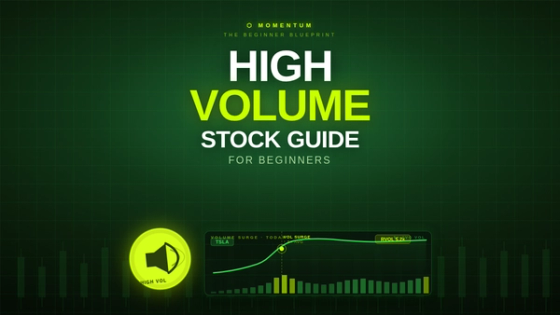
High Volume Stock Guide for Beginners (Step-by-Step)
Volume is the number of shares traded during a given period, whether that's a single minute, an hour, or a full trading day. When a stock trades significantly more shares than usual, it's considered high volume.
Kev’s watchlist lands the night before
The articles explain the method. The room puts it to work: the nightly watchlist lands at 5 PM ET with the levels Kev cares about, then he trades the open live from 8 to 11 AM ET.
Free for 7 days, then $197 a month. Cancel anytime.
An example morning in the room. Illustrative, not a record of a real trade.
March
2026
How to Stop Cutting Winners Early: Decide Exits Before Entry
Selling winners too soon is a well-documented habit in trading research. Here's what the studies found, the exit rules I trade by, and a one-page plan that decides every exit before you enter.

Large-Cap Momentum Trading for Advanced Traders
Large-cap momentum is driven by three distinct engines: trend, catalyst, and flow. Each one demands a different entry style, hold time, and exit plan.
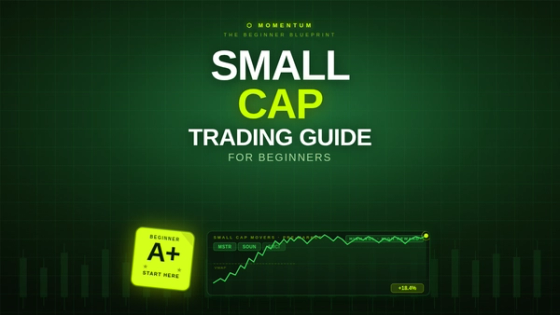
Small Cap Trading Guide for Beginners
Small-cap stocks are shares of companies with a total market capitalization between $300 million and $2 billion. Below that range sit micro-caps (under $300 million) and nano-caps (under $50 million), which you'll frequently encounter in active trading environments.
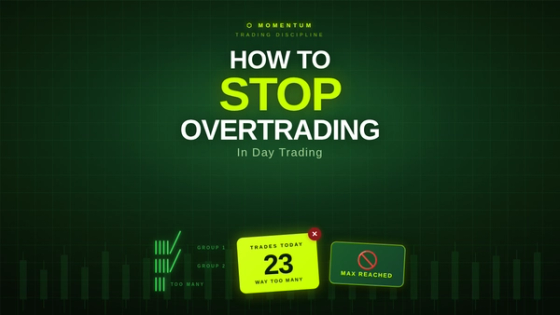
How to Stop Overtrading in Day Trading (Pro Systems)
The root cause is emotional regulation: your brain rewards the act of trading with dopamine, which means willpower alone will never be enough to stop it.
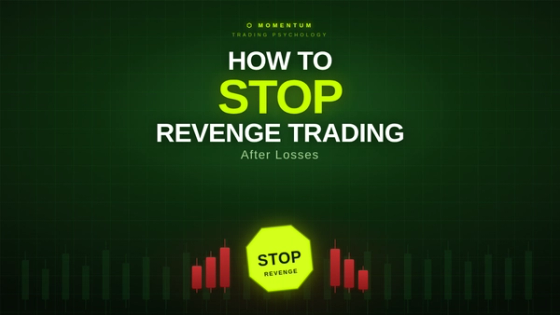
Revenge Trading: What It Is and How to Stop It
What revenge trading is, why a loss makes the next trade look better than it is, and the stop rules to set before the open: a pause, a loss cap, a daily max loss and a time stop.
Page 10 of 15 · 179 articles
Every column on the scanner is a term in the glossary. Gap, relative volume and float, read the way Kev reads them at the open.
An example morning in the room. Illustrative, not a record of a real trade.
The words on the scanner, in plain English
A plain-English day trading glossary: moving average, VWAP, relative volume, Level 2, order types, float, short interest, hard-to-borrow, gap up, and penny stocks, each with a full guide and a trader's take.
- Gap upA gap up is when a stock opens above the prior day's close.
- Relative volumeRVOLRelative volume (RVOL) compares a stock's volume today to its usual volume.
- Level 2Level 2 is the order book, showing the buy and sell orders stacked at each price beyond the best bid and ask.
- Hard to borrowHTBA hard-to-borrow (HTB) stock is one a broker struggles to source shares of for short sellers.
- Penny stocksPenny stocks are low-priced shares of small companies, usually under $5.
- Margin tradingMargin trading means borrowing from your broker to buy more stock, using your account as collateral.
Your first week
in the room is free
The live stream, the watchlists, the scanner and the journal, with Kev at the open every morning.
Free for 7 days, then $197 a month. Cancel anytime.
An example morning in the room. Illustrative, not a record of a real trade.