The day trading blog
Kevin Cabana writes about small-cap momentum day trading: the setups he trades, the risk rules he follows and what happens in the live room each morning.
Free for 7 days, then $197 a month. Cancel anytime.
Education only, not investment advice. Trading involves substantial risk of loss.
Latest articles
New guides, setups and trade breakdowns from Kevin Cabana, newest first.
January
2026
How to Stay Disciplined When the Market Feels Slow
Learn how professional traders stay disciplined during slow markets. Avoid overtrading, protect capital, and master patience when nothing is moving.
How to Recover After a Bad Trading Day (The Right Way)
Learn how professional traders recover after bad days. Stop spiraling, rebuild discipline, and turn losses into learning - the right way.
Scalping vs Day Trading vs Momentum Trading: Which Fits You?
Scalping is a type of day trading, and momentum trading is defined by what you trade. Compare the three on costs, screen time and the June 2026 margin rules, then take the self-test.

FOMO in Trading: Why It Happens and How to Stop Chasing
FOMO is the urge to enter because a stock is moving without you. The psychology behind it, what chasing can cost, the rules I teach, and how to recover.
Kev’s watchlist lands the night before
The articles explain the method. The room puts it to work: the nightly watchlist lands at 5 PM ET with the levels Kev cares about, then he trades the open live from 8 to 11 AM ET.
Free for 7 days, then $197 a month. Cancel anytime.
An example morning in the room. Illustrative, not a record of a real trade.
December
2025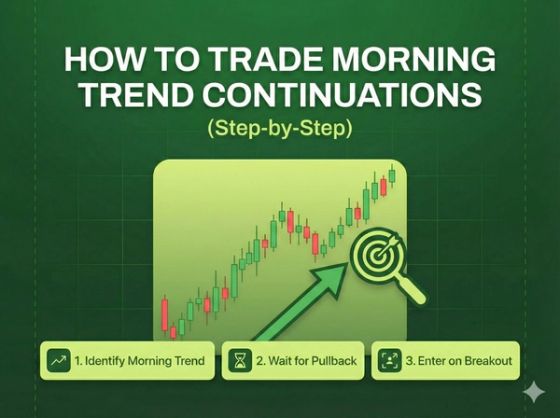
Trend Continuation Patterns: How to Trade the Morning Trend
A trend continuation is a pause inside a trend that resolves in the original direction. Here is how I read continuation patterns in the morning session, when the trend still has another leg, and when it is done.
The 5-Minute Chart: Why It’s the Most Important Timeframe
Why the 5-minute chart is the go-to timeframe for day traders: what it shows that the 1-minute chart hides, and how it filters out noisy, rushed entries.
How to Spot a Trend Reversal Intraday: Signs vs Confirmation
Every reversal starts out looking like a pullback. Here are the intraday warning signs (lower highs, losing VWAP, volume divergence, failed breakouts), what actually confirms a reversal, and a real GMEX example.
Multi-Timeframe Analysis for Day Traders: Daily, 5-Minute, 1-Minute
Multi-timeframe analysis is a top-down read: the daily chart for levels and room, the 5-minute for the setup, the 1-minute for the entry. Here is the process, one real trade walked through chart by chart, and the rules for when timeframes disagree.
The Most Reliable Day Trading Patterns, Ranked (With Real Trades)
Seven intraday patterns ranked by how clearly they define your risk, each with why it works, a real recapped trade, a one-line rule and a link to the full guide, plus what the published research shows.
Price Action Trading for Day Traders: How to Read Candles, Levels and Volume
Price action trading for day traders: how I read candles, levels and volume together, a step-by-step read of a real LUCY trade, and the limits to respect.

Do You Need a Trading Mentor? Group vs Mentor vs Course
A decision table and checklist for choosing between a trading group, a course and a mentor, with published prices checked in October 2026 and the regulators' red flags for fake mentors.
What a Real Trader’s Morning Looks Like (Step-by-Step Breakdown)
Discover how profitable traders structure their morning — from watchlists and prep to live execution and review. Learn the routine that builds consistency.
Page 13 of 15 · 179 articles
Every column on the scanner is a term in the glossary. Gap, relative volume and float, read the way Kev reads them at the open.
An example morning in the room. Illustrative, not a record of a real trade.
The words on the scanner, in plain English
A plain-English day trading glossary: moving average, VWAP, relative volume, Level 2, order types, float, short interest, hard-to-borrow, gap up, and penny stocks, each with a full guide and a trader's take.
- Gap upA gap up is when a stock opens above the prior day's close.
- Relative volumeRVOLRelative volume (RVOL) compares a stock's volume today to its usual volume.
- Level 2Level 2 is the order book, showing the buy and sell orders stacked at each price beyond the best bid and ask.
- Hard to borrowHTBA hard-to-borrow (HTB) stock is one a broker struggles to source shares of for short sellers.
- Penny stocksPenny stocks are low-priced shares of small companies, usually under $5.
- Margin tradingMargin trading means borrowing from your broker to buy more stock, using your account as collateral.
Your first week
in the room is free
The live stream, the watchlists, the scanner and the journal, with Kev at the open every morning.
Free for 7 days, then $197 a month. Cancel anytime.
An example morning in the room. Illustrative, not a record of a real trade.